Summary
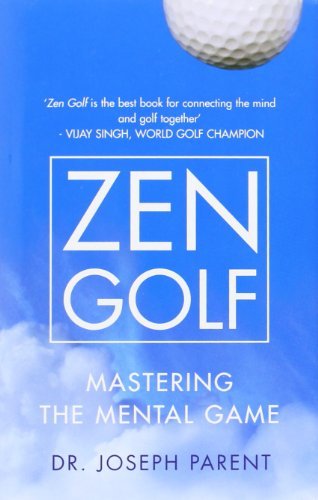
Zen Golf is one of the few golf books that genuinely changed how I play. Its central message is deceptively simple: focus fully on the shot in front of you, let go of the previous one, and stop allowing fear of future outcomes to influence your decisions. In practice, that approach is far more powerful than it sounds.
Introduction
There are countless books that promise to improve your mental game. Most contain some useful ideas, but many end up feeling either overly theoretical or difficult to apply once you're standing over a three-foot putt.
What stood out immediately with Zen Golf was how practical it felt. Dr Joseph Parent draws on both golf coaching and Buddhist principles, but the book never feels preachy or abstract. Instead, it provides simple ways to think about preparation, execution, and response to results.
The concepts are memorable, easy to revisit, and surprisingly effective under pressure.
Pros & Cons
Pros
- Practical techniques that are easy to apply on the course
- Excellent guidance on managing emotions and expectations
- Helps golfers stay present rather than outcome-focused
- Written in a clear, accessible style
- Useful for golfers of every standard
Things To Know
- The ideas require consistent application rather than a quick fix
- Golfers looking for technical swing instruction won't find it here
- Hardback editions can sometimes be expensive
- Some readers may prefer the more affordable Kindle version
Why I Like It
What I liked most was the way the book reframes mistakes. Instead of becoming frustrated by bad shots, it teaches you to acknowledge them, learn from them, and move on. That sounds straightforward, but for many golfers it represents a significant shift in mindset.
The PAR approach — Preparation, Action and Response to Results — gives golfers a simple structure that can be used during every round. It feels properly thought through and remains relevant long after you've finished reading the book.
Image Gallery
Real-World Usage
My own experience with Zen Golf was unusually positive. I read it in the lead-up to one of our club championship weekends and consciously applied many of the principles during the competition.
The result was one of the most enjoyable competitive weekends I've had. I won the first day and played in the final group on day two. More importantly, I remained calmer and more focused throughout. I eventually finished second by a single shot, but I enjoyed the experience far more than I normally would have.
That personal experience is why I rate this book so highly.
Performance
Where this book works particularly well is helping golfers manage the emotional highs and lows that so often derail a round.
Whether you become angry after mistakes, frustrated by poor scoring, nervous under pressure, or overly excited when things are going well, the techniques presented here provide a framework for staying balanced.
In use, I found the lessons surprisingly easy to remember during a round, which is perhaps the strongest compliment I can give any mental-game book.
Design & Practicality
The writing is concise, well organised, and filled with memorable stories and examples. Complex ideas are broken down into practical concepts that golfers can immediately understand.
It gives the impression that every chapter has been written with real golfers in mind rather than simply trying to explain philosophy. That balance is what makes it work so well.
Mini Ratings
Build
Impact
Readability
Value
Practical Use
Trade-Offs & Things To Know
The key trade-off is that Zen Golf is not a technical instruction book. Readers hoping to discover swing positions or practice drills may initially be disappointed.
However, for golfers who already possess enough ability to play good golf but struggle to access it consistently, the lessons can be remarkably valuable.
Verdict
There are very few golf books that I would actively encourage every golfer to read. Zen Golf is one of them.
It offers practical, memorable advice that can improve not only how you score, but also how much you enjoy playing the game. If your biggest challenges are concentration, confidence, frustration, nerves, or emotional control, this book deserves a place on your shelf.
For me, it remains one of the most influential golf books I've read.
Final Recommendation
If you're interested in improving the mental side of your golf rather than endlessly chasing technical fixes, Zen Golf is an easy recommendation. It remains one of the most useful and practical books I've encountered on the subject.
View on Amazon